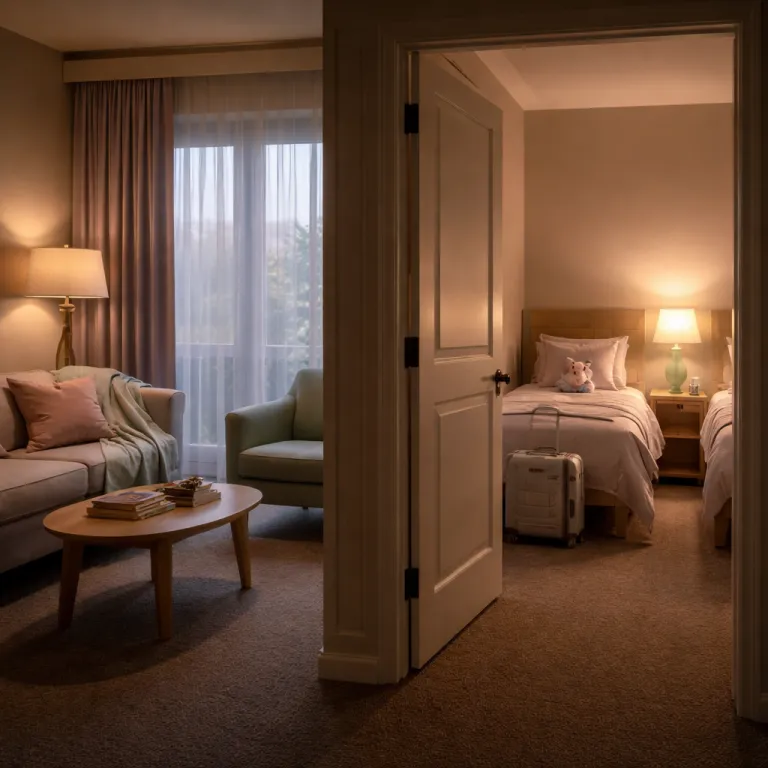
The room taxonomy every traveling family should understand
A family trip rises or falls on the hotel room layout. When you search for a family hotel suite connecting rooms configuration, you are really choosing how everyone will sleep, dress and decompress. Get that wrong and even the most beautiful hotels feel like a cramped overnight flight.
Start with language, because every hotel will use it differently. A junior suite usually means one larger hotel room with a sitting area, sometimes with a sofa bed and sometimes just an armchair, while a one bedroom suite generally offers a separate bedroom with a door and a living space that can host extra beds. Apartment style units go further, adding kitchenettes, dining tables and often a walk shower in a generous bathroom, which can transform a rushed stay into something closer to home.
Then there are connecting rooms and adjoining rooms, which sound similar but are not the same thing. True connecting rooms are two hotel rooms linked by an internal door, so parents and traveling kids can move freely while still closing the door for privacy at bedtime. An adjoining room usually just means the rooms are next to each other along the corridor, which will not help much at 03.00 when a child needs a glass of water and one adult is still in the lobby bar.
Why suites suit babies while connecting rooms suit older kids
Age of children should drive whether you book a suite or connecting rooms. For babies and toddlers, a one bedroom suite or apartment style hotel room keeps the cot in a dark, quiet space while adults read or work in the living area, and the layout means you will hear every rustle without sharing the same bed. For older children and teens, two hotel rooms with guaranteed connecting rooms give everyone more psychological space and a sense of independence that still feels safe.
Think about night time logistics before you confirm any booking. With a baby, a suite where the living room buffers the bedroom lets you order room service, open a laptop or use the coffee maker without waking anyone, and a proper walk shower makes late night clean ups less stressful. With a ten year old and a teenager, two rooms with a king bed in one and twin beds or a double queen in the other can be the ideal family configuration, especially when both rooms have a sofa bed for cousins or friends.
This is where genuinely family focused hotels stand apart from those that simply add a cot. Properties that take design seriously, like the ones we analyse in our feature on redefining family friendly stays at thoughtfully designed family hotels, think about door placement, soundproofing and where the queen sofa or extra beds will sit in relation to windows and blackout curtains. When you ask the reservations team about suites versus connecting rooms, listen for how confidently they describe these details, because that tells you how often they host families like yours.
Noise, privacy and the invisible architecture of sleep
Sound is the hidden variable in every family hotel suite connecting rooms decision. A well planned suite uses the living area as an acoustic buffer, so the bedroom with the king bed or queen beds sits furthest from the corridor and the lift, which matters when you have a light sleeping toddler. In contrast, connecting rooms share a wall and a door, so the quality of that construction will decide whether you hear every whispered joke between siblings or enjoy the rare silence of a successful early night.
When you evaluate hotel rooms online, look beyond the headline size and count the doors. A layout where the bathroom with a walk shower sits between the living room and the bedroom will usually be quieter, and a corridor style entrance can shield you from late night returning guests. In connecting rooms, ask whether the connecting door is solid and how thick the walls are, because some older hotels retrofitted connecting rooms by simply cutting through, which can transmit more noise than a purpose built adjoining hotel configuration. A simple way to visualise this is to imagine a floorplan captioned “Bedroom at the quiet end, bathroom in the middle, living room by the corridor”, which is the pattern many newer family suites follow.
Privacy matters as much as decibels. Parents often underestimate how liberating it feels to close the connecting door between two rooms once everyone is safely in bed, especially on longer stays when work calls or emails still demand attention. For multi generational trips, where grandparents, parents and traveling kids share space, a mix of a larger suite plus one adjoining room can work beautifully, and you can read more about these dynamics in our guide to how in room kitchens changed family travel, which also explores why separate sleeping zones reduce friction.
Booking strategies: how to actually secure connecting rooms
The most common frustration for any family hotel suite connecting rooms search is that small phrase in the fine print. When a hotel says connecting rooms are “subject to availability”, it usually means the configuration is a request, not a guarantee, which can unravel your carefully planned stay at check in. To avoid that, you need to treat the booking process as a negotiation, not a simple click.
Start by using the hotel website or a trusted booking platform to hold the basic rooms, then contact the property directly by email or phone. Ask for written confirmation that your hotel rooms are guaranteed as connecting rooms, specifying whether you need a king bed plus twin beds, a double queen plus a queen sofa, or any other exact mix of beds. Many upscale hotels will flag your reservation in their system and some chains even sell specific family configurations as a single suite product, which removes the risk of being split across floors.
Travel agencies and corporate travel managers can be powerful allies here. Hotel chains know that repeat business from families is growing, especially as extended stay brands see more leisure bookings, so they are more willing to confirm an adjoining room or a pair of connecting rooms in writing for trusted partners. For complex itineraries, such as multi city trips or three generation stays like the ones we unpack in our feature on making multigenerational hotel stays work, a specialist agent can coordinate room types, cancellation policies and even pre arrival notes about traveling kids and their routines.
To make this easier, keep a short checklist when you book: confirm whether the rooms are guaranteed connecting rooms or simply adjoining rooms; ask how many doors separate sleeping and living areas; clarify exact bed types and sofa bed sizes; and note whether both rooms include full bathrooms. A concise email that lists your children’s ages, preferred layout and arrival time gives the reservations team something concrete to work with and increases the odds that your family configuration will be ready when you arrive.
Design details that make or break a kid friendly hotel room
Once the configuration is set, the micro design of the hotel room shapes daily life. Families who care about aesthetics as much as practicality should look for hotels where the design team clearly thought about how a family will move through the space, from where the beds sit to how easily you can reach the coffee maker while a child naps. These details separate a merely large room from an ideal family base.
Start with sleeping surfaces, because not all beds are equal for families. A king bed for parents plus twin beds for children often works better than a double queen layout, since it gives everyone their own defined space and reduces midnight elbow wars, while a high quality sofa bed can be a great solution for a third child if the mattress is thick and the frame solid. Check whether the queen beds or double queen option leave enough floor space for play, and whether a queen sofa or extra bed will block access to the bathroom or balcony.
Then look at the quiet luxuries that matter at 06.30 with jet lagged kids. A bathroom with a walk shower and a separate tub makes quick rinses and longer bedtime routines easier, while a powerful hair dryer and decent storage help you reset for dinner without turning the room into a laundry zone. In room amenities like a coffee maker, a small fridge and a proper table mean you can serve simple breakfasts or snacks without relying on room service, which is especially helpful in apartment style suites where hotels expect guests to stay longer and live more fully in the space.
To visualise the difference, imagine three simple layouts: a junior suite with one open plan sleeping and sitting zone; a one bedroom family suite with a door between bedroom and living room; and two connecting rooms with an internal door between them. The first suits short stays with one small child, the second works for babies and toddlers with early bedtimes, and the third gives older kids and teens their own room while keeping everyone linked.
Extended stay and business hotels: the quiet heroes for families
Some of the most effective family hotel suite connecting rooms options hide in plain sight. Extended stay and business focused hotels were designed for corporate guests, but their apartment style layouts, generous hotel rooms and practical amenities now attract families who prioritise sleep and space over ornate lobbies. When parents say they value square metres and doors more than spas, these are often the hotels that answer that brief.
Many extended stay brands offer one bedroom or two bedroom suites with full kitchens, a living area with a sofa bed and sometimes an additional adjoining room that can be reserved together. This gives you the flexibility of connecting rooms with the cohesion of a single suite, and the ability to cook simple meals can be transformative for traveling kids with early bedtimes or specific diets. As one industry explainer puts it, “What is a connecting room?” and “How to book connecting rooms?” are now standard questions in brand training, because families are such an important guest segment.
Service style will feel different from a grand resort, but it can be a great trade off. Housekeeping might come once a day instead of twice, yet you gain a proper dining table, more storage for luggage and sports gear, and often laundry facilities that make longer stays realistic. For executives turning a work trip into a family break, choosing an adjoining hotel suite in an extended stay property near the business district can mean a short commute for meetings and a genuinely comfortable base for the family, rather than asking everyone to squeeze into a single traditional hotel room and silently regret the decision.
How to read between the lines of hotel descriptions
Luxury and premium hotels are getting better at describing their family hotel suite connecting rooms options, but the language still needs decoding. When a property highlights “spacious family rooms” without specifying beds, doors or square metres, you should assume it is a single large room until proven otherwise. When it lists “two bedroom family suite with separate living area”, you can usually expect at least three doors and enough separation for different bedtimes.
Train yourself to scan for the details that matter to your family. Look for explicit mentions of a king bed in the master bedroom, twin beds or queen beds in the second bedroom, and whether a sofa bed or queen sofa is standard or on request, because that affects how many guests can stay comfortably. Check whether the description clarifies if the rooms are true connecting rooms or simply adjoining rooms, and whether the hotel will guarantee that configuration at booking or only note it as a preference.
Finally, do not be afraid to ask direct questions and to push past generic marketing language. Ask whether the coffee maker is a capsule machine or a basic kettle, whether the hair dryer is wall mounted or professional grade, and whether the walk shower has a handheld attachment that makes rinsing small children easier. If the reservations team responds quickly, answers precisely and does not ask you to skip content in the fine print, you are more likely to arrive at a hotel where the room, the rooms and the overall suite layout work as promised, and where both parents and traveling kids can genuinely relax.
Key figures on family suites and connecting rooms
- Recent hotel design commentary suggests that dedicated family suites are increasingly planned with enough square metres to host separate sleeping zones and living areas comfortably, reflecting a clear shift toward apartment style layouts rather than single oversized rooms. Industry case studies from major brands such as Marriott and Accor describe new builds where more than a quarter of keys are multi room or suite style units.
- Industry discussions indicate that a significant share of full service hotels now offer some form of connecting rooms, but only a subset of these properties will guarantee specific configurations at the time of booking rather than on arrival. Internal brand surveys often cite figures in the 20–30% range for hotels that can confirm exact connecting room pairs in advance.
- Surveys of family travellers consistently show that parents rank sleep quality and space above pools, kids’ clubs or on site restaurants, which explains the rising demand for suites, connecting rooms and multi room units in urban and resort hotels. For example, several recent family travel polls report that well over half of respondents would trade a resort feature for an extra bedroom or guaranteed connecting rooms.
- Extended stay brands report a steady increase in leisure and family bookings, as their one bedroom and two bedroom suites with kitchens and laundry facilities attract guests planning longer stays in major cities and resort gateways. Public earnings calls from large hotel groups frequently highlight double digit growth in this segment, driven in part by multi generational trips and blended work and vacation stays.
Frequently asked questions about family suites and connecting rooms
What is a connecting room in a hotel ?
A connecting room in a hotel is one of two separate hotel rooms linked by an internal door that can be locked from either side. This allows a family to move between the rooms without using the corridor while still closing the door for privacy or quiet time. It differs from an adjoining room, which is simply next door along the hallway without an internal connection.
How should I book connecting rooms for my family stay ?
The most reliable method is to reserve the basic room types online, then contact the hotel directly to request and confirm connecting rooms in writing. You can also work through a trusted travel agency, which often has stronger relationships with hotel chains and can secure guaranteed configurations. Always ask the hotel to note the exact bed types and ages of children on the reservation.
Are connecting rooms more expensive than a single family suite ?
Pricing varies by hotel and destination, but two connecting rooms can sometimes cost slightly more than one large family suite of similar total size. In return, you gain two full bathrooms, more storage and greater flexibility with bed types, which many families consider worth the premium. Some hotels package connecting rooms as a single family offer, which can be competitively priced during off peak periods.
What is the difference between a junior suite and a one bedroom suite ?
A junior suite is usually a single large room with a sitting area, sometimes separated by a partial wall or screen but without a full door. A one bedroom suite has at least two distinct rooms, typically a bedroom with a door and a separate living area that can host a sofa bed or extra beds. For families, a one bedroom suite generally offers better separation of sleep and living zones.
How can I tell if a hotel is genuinely family friendly from the room description ?
Look for precise information about room layouts, bed types, doors and amenities rather than vague phrases like “family friendly”. Clear descriptions of connecting rooms, suites with separate bedrooms, sofa beds, bath and walk shower combinations and practical items like a coffee maker and hair dryer suggest the hotel has thought about real family needs. If you still have doubts, contact the property with specific questions about your children’s ages and routines and assess how detailed and confident the answers are.