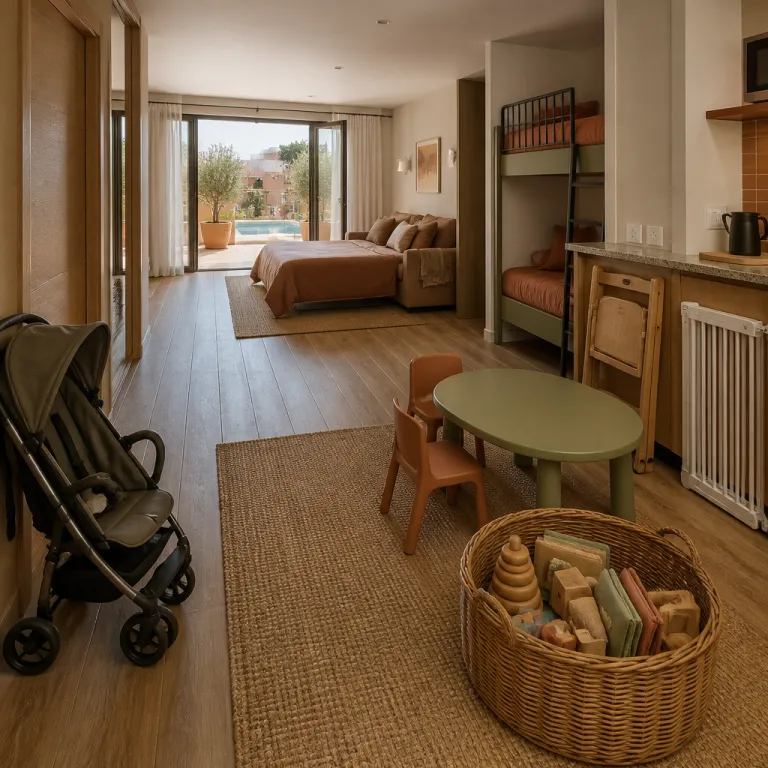
The spectrum from “family friendly” label to genuinely designed family stay
When you search for a family-friendly hotel, what to look for is rarely obvious from the first glossy photo. Some properties add a cot to a standard room, print a kids’ menu and call themselves a family hotel, while others rethink circulation, acoustics and staffing so that parents and children can actually exhale. The gap between those hotels is where most family travel frustration lives, especially when you have tired kids, luggage, and only one chance to book the right stay.
Truly family-friendly hotels start with layout, not slogans, and that begins with rooms that work for real families. Look for suites with doors that close, connecting rooms with guaranteed configurations, and queen beds instead of narrow twins that leave parents sleepless when a child climbs in at 03.00. When a hotel website shows clear floor plans, maximum occupancy for all rooms and suites, and explains where cribs or extra beds fit, you are usually looking at one of the best family options in that destination.
Service philosophy is the second signal that a hotel is serious about families, not just their wallets. Properties that attract repeat family travelers usually offer early check-in when possible, flexible housekeeping for nap schedules, and staff who speak directly to children as well as adults. Industry surveys from organisations such as the Family Travel Association, whose 2023 U.S. Family Travel Survey found that more than 80% of parents prioritise family-focused accommodation, suggest that a large majority of families now prefer clearly family-oriented hotels, and the properties that respond with thoughtful design and service see higher loyalty and better long-term results.
Reading the physical signals: rooms, layouts and quiet luxury that works with kids
On any luxury booking platform, the smartest way to approach a family-friendly hotel and decide what to look for is to start with the floor plan. A genuinely kid-friendly property will show how rooms connect, where the doors are, and whether the suites place children near a bathroom and away from balcony drops or steep stairs. If you only see generic photos of a hotel room with a single angle and no measurements, assume you will be improvising once you arrive with your family.
For urban family travel, cities like San Francisco illustrate the difference between marketing and reality. A hotel in Union Square might advertise itself as a family-friendly resort in the city, but if the only option is one small room with two queen beds and no space for a crib, your stay will feel cramped within hours. In contrast, some hotels near Nob Hill or close to the cable car lines offer multi-room suites, sliding doors, and half baths that allow kids and adults to get ready at the same time, which is a great advantage on a tight travel schedule.
When you look at family hotels in dense districts such as Fisherman’s Wharf or central Tokyo, pay attention to childproofing and circulation. Properties that take families seriously often add soft-close doors, window locks, rounded furniture edges and blackout blinds that help jet-lagged children sleep, as seen in many of the best connecting suites highlighted in guides to family hotels in Japan such as this in depth look at Japanese family stays. These physical details matter more than a generic promise of friendly service, because they shape every minute of your family vacation.
Service signals that a hotel is built around families, not just tolerating them
Once the rooms work, the next layer in choosing a family-friendly hotel is service that anticipates how families actually move through a day. A property that welcomes children will usually offer breakfast from very early, allow room service at odd hours, and provide quick laundry for the inevitable spills. When a hotel trains its équipe to greet kids by name, offer small choices, and explain nearby attractions at child height, you feel the difference immediately.
High-end family hotels often appoint a dedicated family concierge who coordinates strollers, car seats, restaurant reservations and tickets for museums or aquariums. This role bridges the gap between the hotel and local partners such as family travel agencies or childcare providers, which is especially valuable in destinations like San Francisco or Santa Monica where traffic and distances can complicate a short stay. When management invests in this level of support, it signals that families are not an afterthought but a core part of the hotel strategy.
Look for flexible policies that respect the realities of family travel rather than penalizing them. A genuinely kid-friendly resort will usually offer early check-in when rooms are available, late checkout for a fee that feels reasonable, and understanding around small noise from children during daytime hours. For more guidance on how to choose refined kids’ hotels near you, resources such as this detailed selection framework can help you decode the language that hotels use and align it with the way your own family travels.
Kids’ clubs, pools and play spaces that respect children and parents equally
For many families, the kids’ club is the deciding factor in a family-friendly hotel, especially on longer stays. The best family programs feel more like a thoughtful summer camp than a holding pen, with clear age groupings, structured and free play, and staff who are qualified in childcare rather than just general hospitality. When a hotel publishes staff-to-child ratios, daily schedules and safety protocols, you can evaluate whether it suits your child rather than guessing from a single photo of a ball pit.
Pools and outdoor areas reveal even more about how a hotel thinks about children. A genuinely kid-friendly pool will have shallow zones, clear depth markings in metres, non-slip surfaces and, ideally, a separate quiet area where parents can read while kids play within sight. Fenced play areas, shaded seating and nearby bathrooms turn a simple swim into a relaxed family vacation ritual instead of a stressful daily negotiation.
Red flags appear when a property markets itself as a family-friendly resort but hides key restrictions in the fine print. Adults-only pools, restaurants that only open after 20.00, or noise policies that effectively exclude children from shared spaces all contradict the promise of a friendly hotel for families. As one industry answer puts it clearly, “What amenities define a family-friendly hotel? Family suites, childproofing, kids’ clubs, and on-site entertainment.”
How to read between the lines of reviews and hotel websites
Even on a polished hotel website, the language around a family-friendly hotel can be vague, so you need to read like an editor. When you see phrases such as “children welcome” without details on cribs, extra beds or interconnecting rooms, assume the infrastructure is limited. In contrast, when hotels specify the number of suites with doors, the exact size of rooms in square metres, and whether queen beds or sofa beds are standard, they are usually ready for real families.
Guest reviews are invaluable, but you must filter them through your own family travel style. Look for comments from family travelers who mention the ages of their children, the type of room they booked, and how staff handled early arrivals or late departures. Pay attention when several families praise the same aspects, such as quiet corridors at night, genuinely pet-friendly policies that work with kids, or staff who helped navigate public transport like the cable car in San Francisco with a stroller.
Some of the best family hotels never use the word family in their marketing at all. Instead, they quietly offer large rooms, thoughtful kids’ amenities, and seamless support for multi-generational trips, as seen in many properties highlighted in guides to three generations sharing one hotel such as this multigenerational travel playbook. When you learn to spot these patterns, you can book hotels that under-promise and over-deliver for families, rather than the reverse.
Destination examples: from San Francisco hills to Santa Monica beach
Looking at specific destinations helps clarify what to look for in a family-friendly hotel, because geography shapes design. In San Francisco, steep streets and compact footprints mean that a hotel in Union Square or Nob Hill might prioritise vertical circulation and smaller rooms, while a property near Fisherman’s Wharf can spread out more like a resort. Families should check whether a hotel san francisco address offers easy access to parks, level walking routes and public transport, not just shopping.
When you book a stay in a central hotel san francisco district, ask how far the nearest cable car stop is in metres and whether strollers are allowed at all times. Family-friendly hotels that understand how parents travel will often provide route maps to nearby attractions such as playgrounds, piers or aquariums, and may partner with local family attractions for timed entry tickets. These details matter more than a generic promise of a great location, especially when you are pushing a buggy up a hill with a tired child.
Beach destinations such as Santa Monica present a different set of signals. Here, the best family properties often combine large suites with balconies, easy access to the sand in minutes, and clear policies about children in pools and restaurants so that expectations are aligned. Whether you choose a compact city hotel or a coastal resort, the same principles apply: rooms that work for families, staff who understand children, and a setting that supports the way your family actually moves through a day.
Designing for modern families: what the industry is changing and why it matters
Behind the scenes, hotel management teams are rethinking what a family-friendly hotel should offer as demand grows. Industry data over recent years shows a steady increase in family travel bookings, and properties that respond with better room design, childproofing and kids’ programming are seeing higher retention and fidélité. The most forward-looking hotels treat families as long-term partners, not just seasonal guests.
Operationally, hospitality staff now work with specialised tools such as modular furniture, integrated safety equipment and digital concierge platforms to support families. Methods include implementing childproofing measures, offering family suites and connecting rooms, and providing on-site entertainment for children that goes beyond screens. Hotels offering personalised family experiences, eco-friendly practices and educational activities for children are setting a new benchmark for what a family-focused hotel can be.
The expected impact is clear: enhanced family travel experiences, better safety and comfort, and stronger loyalty from families who return year after year. As one expert answer summarises, “How can I ensure a hotel is safe for my children? Look for childproofing measures and safety certifications.” Another industry response reminds parents that “Are family-friendly hotels more expensive? Not necessarily; many offer competitive rates with added value for families.” When you combine these insights with your own priorities, you can choose hotels that respect both your children and your time.
Key figures that define genuinely family friendly hotels
- Recent surveys from organisations such as the Family Travel Association indicate that a significant majority of families now say they prefer clearly family-friendly hotels, which pushes hotels to upgrade rooms, kids’ facilities and safety features.
- Travel industry reports over the past five years point to a double-digit percentage increase in family travel bookings, showing that families are travelling more often and expecting higher standards from hotels.
- Hotels that invest in childproofing, family suites and on-site entertainment for children consistently report higher guest satisfaction scores and stronger repeat booking rates among families in internal hospitality benchmarks.
- Properties that publish clear information about room sizes, maximum occupancy and kids’ policies on their hotel website see fewer complaints and better online reviews from family travelers.
FAQ about genuinely family friendly hotels
What amenities define a genuinely family friendly hotel ?
The core amenities include family suites with doors that close, connecting rooms, childproofing such as window locks and outlet covers, and on-site entertainment for children. High-quality kids’ clubs, shallow pool areas and flexible dining hours also signal that a hotel is designed for families. When these elements appear together, you are usually looking at one of the best family options in that area.
How can I check if a hotel is really safe for my children ?
Start by reviewing the hotel website for details on safety features such as balcony locks, lifeguards at pools and certified childcare staff. Then read recent reviews from families who mention the ages of their children and any safety issues they noticed during their stay. If information is vague, email hotel management directly and ask specific questions about childproofing and supervision in kids’ areas.
Are family friendly hotels always more expensive than regular hotels ?
Family-oriented properties are not automatically more expensive, because many balance rates with added value such as breakfast, kids’ activities or included cribs. When you factor in the cost of external childcare, transport to distant attractions and meals that do not work for kids, a well-designed family hotel can offer better overall ROI. Comparing total trip costs rather than just nightly rates helps you see which option truly suits your family vacation budget.
What red flags suggest a hotel is not as family friendly as it claims ?
Warning signs include adults-only pools in a supposedly family resort, restaurants that only open late in the evening, and strict noise policies that effectively exclude children from shared spaces. Limited information about room configurations, no mention of cribs or extra beds, and vague references to a kids’ corner without details also indicate a token approach. When you see these patterns, consider alternative hotels that are more transparent about how they welcome families.
How can I choose between different family hotels in the same destination ?
Compare the layout of rooms and suites first, then look at location relative to nearby attractions that matter to your children. Evaluate service features such as early check-in, laundry, kids’ clubs and dining flexibility, and weigh them against your own family travel style. Finally, read several recent reviews from families with children similar in age to yours, because their experiences will mirror your likely stay more closely than generic ratings.