From convention stronghold to signia hilton diplomat family hotel 2026 test case
On Hollywood’s Diplomat Beach in South Florida, a onetime convention giant has quietly become a bellwether for family luxury. The reimagined Signia by Hilton Diplomat Beach Resort, often framed as a new benchmark for family-focused Signia stays heading into 2026, now pairs more than 200,000 square feet of indoor meetings and events space with a serious commitment to children and parents. According to Hilton and Trinity Investments’ 2023 renovation announcements, the hotel’s meetings footprint remains central to the business model, but the guest experience has been recalibrated around families who want resort-style amenities without giving up city access.
The property sits between Miami and Fort Lauderdale, with the international airport in each city placing the hotel within roughly a 15- to 20-kilometre transfer for most guests, depending on traffic. Trinity Investments, which acquired the Diplomat in 2022 and, according to company statements, invested approximately 80 million USD in renovations, has pushed the Signia brand to prove that hotels and resorts built for conferences can also anchor top family destinations. The result is a beach resort where a thousand rooms, close to a thousand linear feet of sand and a new kids’ programme now compete directly with purpose-built family resorts across South Florida.
Families booking the Signia by Hilton Diplomat in the current family travel era will notice how the lobby, verandah social spaces and dining venues now encourage lingering rather than rushing to the next breakout session. The Veranda social lounge functions almost like a relaxed club, with parents using laptops while children drift between games and the pool. As one repeat guest from New York put it during a recent spring visit, “It still feels like a big convention hotel, but now my kids actually want to hang out downstairs instead of begging to leave.” It is a subtle but telling pivot from pre-renovation days, when social energy centred on corporate groups and closed-door meetings and events.
For premium travellers, Club Signia on the thirty-third floor reframes the old executive club model for multigenerational trips. Here, guests gain access to quieter breakfast service, evening bites and a vantage point over the infinity pool and Diplomat Beach that helps justify the higher room category. The Signia by Hilton positioning is clear: this is no longer only a Hilton for conference planners, but a hotel where families can use Hilton Honors points or a travel credit card to secure elevated stays.
That loyalty angle is not incidental, because many parents arrive with significant Hilton Honors points balances earned on business trips. At the Diplomat’s current family-friendly standard, those points can now be channelled into connecting room bookings, Club Signia access or upgrades that make a long weekend feel like a full resort holiday. For a generation of travellers who toggle between corporate cards and family credit card statements, the ability to convert work nights into beach time is a powerful signal of where luxury is heading.
Trinity Investments and Hilton Worldwide Holdings Inc. describe the strategy in simple terms in their public communications: “Luxury family travel”, “Resort modernization”, “Enhanced guest experiences.” Those phrases translate on the ground into a property that still hosts large-scale meetings and events while courting families who might previously have chosen smaller coastal hotels. For readers comparing urban stays, the same tension between business and family needs appears in many elegant family-friendly hotels in London, and the Diplomat now offers a South Florida answer to that balancing act for travellers searching for Signia by Hilton Diplomat family travel options.
Kids’ clubs, pools and the new south florida family benchmark
The most visible sign of the Diplomat’s family pivot is the new Kids Club Day Camp. Unlike the occasional craft corner that some hotels and resorts label as a kids’ club, this programme runs structured activities that move between indoor rooms, the beach and the pool with clear age bands. Parents who have sampled more immersive children’s clubs where snorkelling is part of the stay in reef-focused family resorts will recognise the ambition, even if the Diplomat’s version is framed by an urban coastline rather than coral, and families searching for a kids club in South Florida will find the format closer to a day camp than a drop-in playroom.
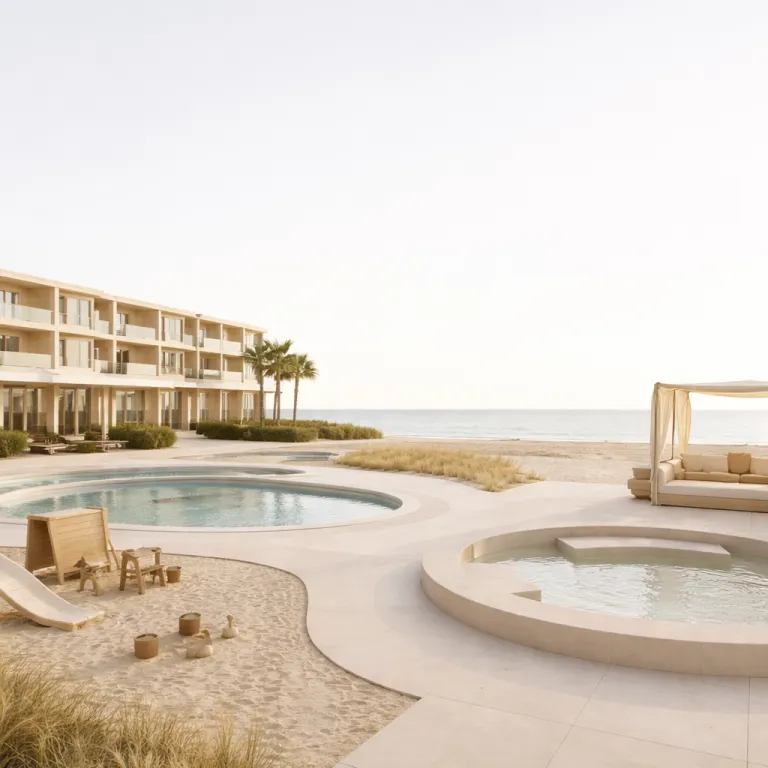
Outside, the Solara infinity pool and the Grand Lagoon pool now read as distinct zones rather than one generic water feature. The infinity pool lines up with the horizon and suits older children who can swim lengths while parents lean into the beach resort calm, whereas the lagoon-style pool wraps around shallower areas that work for toddlers and early swimmers. Cabanas, including adult-only options, give families a semi-private base that feels closer to a Mediterranean club than a traditional Hilton conference deck.
On the sand, the Diplomat Beach frontage stretches for roughly 300 metres, with loungers and umbrellas reserved for hotel guests; this figure is based on resort planning documents and local property records cited in local tourism briefings. This controlled access makes the property feel more like a self-contained resort, even though the urban grid of South Florida sits just behind the dunes. For families used to purpose-built complexes such as Nickelodeon-themed hotels, the ability to step from room to beach in a few minutes without shuttle buses is a quiet luxury.
Dining has been overhauled with six chef-driven venues that deliberately span family-friendly and grown-up moods. Diplomat Prime remains the signature steakhouse, giving parents a reason to book a sitter while children enjoy room service or supervised evening activities, and other restaurants lean into coastal comfort food that works for jet-lagged kids. The Veranda social bar and lounge, meanwhile, acts as a flexible space where a quick snack, a coffee or a glass of wine can all happen without leaving the main social hub.
Wellness has not been sidelined in the Diplomat’s family blueprint. The Diplomat Spa offers treatments that appeal to parents who have spent the morning at the pool or on the beach, and the fitness centre sits close enough to the main circulation routes that a 30-minute session feels realistic between family commitments. For families who prize active stays, this balance of spa access, infinity pool time and oceanfront walking paths compares favourably with more isolated resorts that require longer transfers from the airport.
From a practical standpoint, the property’s location between Miami International Airport and Fort Lauderdale-Hollywood International Airport gives families flexibility on routes and fares. Many guests arrive on early flights, use Hilton Honors points or elite status to request early check-in when available and then head straight for the pool while luggage catches up with the room. For those planning multi-stop itineraries that mix reef-focused kids’ clubs with city breaks, the Diplomat can slot between a snorkelling-heavy stay and an urban cultural stop without feeling like a compromise.
Club floors, credit cards and what the diplomat signals for family luxury
The Diplomat’s story is not only about slides and sandcastles; it is also about how families pay for and structure their stays. Many premium travellers now blend Hilton Honors points, corporate travel budgets and personal credit card rewards to assemble multi-night trips that feel indulgent yet rational. At this property, that mix can unlock Club Signia access, upgraded room categories and dining credits that meaningfully change the experience.
Credit card partnerships, while governed by the usual “terms apply” fine print, play a visible role in how families interact with the resort. Parents might use one card to earn extra points on Diplomat Prime dinners, another to secure late check-out, and a third to redeem for airport transfers between the hotel and Fort Lauderdale or Miami. This stacking of benefits reflects a broader trend in luxury family travel, where value is measured less in headline rates and more in how many touchpoints a property offers across a single year of trips.
Inside the rooms, the renovation has prioritised flexible layouts that can handle cots, rollaways and teenagers who need their own beds. Connecting room options are clearly mapped, which matters in a thousand-room hotel where families can otherwise feel lost in the inventory, and many categories offer balconies that look over the beach or the pool. For parents used to smaller European coastal properties where every square metre counts, the sense of space here feels like a deliberate response to multigenerational travel patterns.
Social spaces have been recalibrated to encourage intergenerational mingling rather than siloed business groups. The Veranda social lounge, for example, hosts informal gatherings that feel closer to a neighbourhood club than a pre-function foyer, and children are not treated as an afterthought in the seating plan. This aligns the Diplomat with other destinations where promenades and terraces become family living rooms, much like the seafront walks that define many French Riviera with kids itineraries.
From an industry perspective, the Diplomat’s repositioning shows how meetings- and events-heavy properties are chasing the family luxury market without abandoning their core business. Weekdays can still see large conferences using the 200,000 square feet of indoor event space, while weekends tilt towards leisure guests who care more about the infinity pool and the Diplomat Spa than the ballroom layout. For South Florida, this dual identity strengthens the region’s claim as a year-round family destination that does not rely solely on theme parks.
For readers tracking trends, the Diplomat’s transformation suggests that future top family destinations will not always be purpose-built resorts on isolated beaches. Instead, we are likely to see more urban coastal hotels, operated by brands such as Hilton and backed by owners like Trinity Investments, layering kids’ clubs, beach access and club-level perks onto existing towers. Families who understand how to combine points, cards and carefully chosen properties will be best placed to turn that shift into memorable stays, whether in South Florida or in other cities where elegant family-friendly hotels are quietly rewriting the rules.